The Conrad Hotel, Dubai
10 September | Awards Ceremony
The Conrad Hotel, Dubai
10 September | Awards Ceremony

PNC Architects (PNCA) has embarked on a transformative digital journey to become an avant-garde solutions provider for its parent company, Sobha Realty, aligning with its vision of delivering high-quality real estate developments at speed.
PNC Architects is leading a digital transformation in real estate design and execution, integrating advanced technologies to enhance efficiency, collaboration, and innovation as the design arm of Sobha Realty.
This progress highlights PNC Architects' commitment to digital excellence, marked by the deployment of a robust ecosystem encompassing BIM, CDE, AI-driven workflows, and automation. By enabling real-time collaboration among internal and external stakeholders, the firm has established an industry-leading approach to digital project management, ensuring streamlined workflows and improved project delivery.
The impact of this transformation is evident in PNC Architects’ growth, supporting more than 70 active projects, delivering over 165,000 IFC submissions, and securing approvals for more than twelve Building Information Models through Dubai Municipality’s automated compliance system.
PNC Architects drives digital innovation by integrating AI, algorithmic design, and data-driven design approaches. This enhances efficiency, accuracy, and sustainability across all project phases. By prioritising technology-driven solutions, the firm optimises operations and outcomes, shaping the future of real estate development through smarter, more sustainable practices.

Group AMANA’s digital design is delivery-driven: we use computation, model-based collaboration and automation to explore options early, lock buildable solutions fast, and carry decisions through to fabrication and site execution.
Teams collaborate on the model from early stages to streamline decision-making and reduce time to completion, supported by 4D simulation when sequencing must be tested.
In the last two years we have evolved from a single BIM function into an integrated Digital Engineering & Construction operating model:
(1) BIM Delivery for standards and model quality,
(2) VDC for constructability and site-facing coordination, and
(3) Development/Automation to build rules-based tools that reduce repetitive work (automated model generation, CAD-to-model conversion, automated data extraction).
The business objective is speed-to-market across industrial facilities, plus industrialised modular delivery.
DuBox reports up to 30% reduced material wastage, 70% improved work safety environment, 30–50% less time from design to finished structures, and 85% construction completed off-site. DuPod reports 2,500+ pods manufactured since 2020, 50+ pod designs engineered since 2020, and up to 30% reduced manpower.
Outcomes are tracked through CDE logs, automation outputs, and project KPI dashboards.

Rua Al Madinah is a transformative mixed-use district adjacent to the Prophet’s Mosque, designed to reposition Madinah as a global benchmark for spiritual hospitality and sustainable urbanism. The project achieved the first community-level Mostadam Diamond certification for implementing sustainability systems across mobility, infrastructure, land use, and smart city solutions.
Supporting this leadership, the company holds 18 Mostadam-certified commercial assets, the largest green building portfolio in Saudi Arabia, positioning Rua at the highest possible sustainability standard.
The project’s ESG strategy integrates three complementary layers: climate-responsive design, data-driven operations, and robust governance. Environmentally, the masterplan and buildings target significant reductions in energy and water consumption, supported by advanced waste management
The sustainable public realm - comprising 63% green space with multifunctional landscapes, more than 80% of plants native to Medina, permeable surfaces, and water-sensitive design - simultaneously addresses stormwater management, urban heat mitigation, and community well-being.
Socially, the project will accommodate 30 million visitors annually by 2030 while enhancing well-being, comfort, accessibility, and walkability, and creating more than 93,000 quality jobs. Governance is anchored in a board-approved sustainability strategy, detailed sustainability process manuals, and standardised procedures that embed and govern ESG in daily decision-making, rather than treating sustainability as a parallel initiative.
PNC Architects is driving a digital-first transformation in real estate design and delivery, operating as the strategic design arm of Sobha Realty, to enable high-quality development at scale and speed. The practice integrates advanced digital technologies to improve delivery certainty, coordination, and execution efficiency across complex project portfolios.
A comprehensive digital ecosystem has been implemented, incorporating BIM, a Common Data Environment, AI-enabled workflows, and automation. This environment enables coordinated, model-based execution and replaces fragmented, discipline-specific processes with real-time collaboration.
The framework supports the entire project lifecycle, from feasibility and concept design through authority approvals, construction coordination, sales integration, and operational planning, ensuring information remains accurate, traceable, and reusable. Integrated workflows connect design, construction, manufacturing, sales, and operations, improving decision-making and reducing delivery risk.
The digital strategy was driven by clear business requirements, including rapid portfolio expansion, increasing project complexity, compressed delivery timelines, regulatory compliance, and consistent quality across concurrent developments.
In the last two years, PNC Architects has supported more than 70 active projects, delivered over 165,000 IFC submissions, and secured approvals for more than 12 digital project models through Dubai Municipality’s automated compliance system. In parallel, more than 27,000 sales purchase agreements were issued using verified, model-derived data.

Trojan Construction Holding has delivered measurable improvements in construction performance by embedding BIM-enabled digital delivery within a structured, enterprise-scale engineering organisation.
Over the past 24 months, digital initiatives have been translated into real site outcomes across complex, multi-disciplinary projects, improving safety, productivity, quality, cost certainty, and handover reliability under live construction conditions. Trojan’s contractor-led approach integrates BIM and digital delivery across tendering, procurement, design coordination, construction execution, logistics planning, and closeout. A multi-disciplinary Engineering Department operating across regions provides a single, reliable source of information that strengthens decision-making, reduces rework, and reinforces accountability at site level.
A key differentiator is Trojan’s Engineering Centre of Technical Excellence, operating at enterprise level to provide technical authority, standards, advisory support, and assurance across disciplines. Complementing this is a scalable BIM Hub in
Egypt, delivering coordination, model production, digital workflows, and data management within controlled governance. Executive leadership defines strategy and standards, while embedded BIM teams in the UAE and Saudi Arabia execute delivery. Continuous feedback from site execution refines methods and tools, ensuring consistent, repeatable performance.
As a result, Trojan converts digital capability into tangible construction outcomes, delivery certainty, and sustainable business value.

Transformation and innovation is not a recent initiative; it is embedded in Dubai Holding Real Estate’s (DHRE) DNA, flowing from our vision to ‘pioneering the diverse communities of tomorrow, through inspired design and memorable experiences’. This foundational commitment is formalised in our transformation and innovation strategy, a framework meticulously designed to align our digital ambitions with core business goals.
Our roadmap operationalises this vision through a unified digital ecosystem, centered on an enterprise-wide Common Data Environment (CDE). This is governed by a stringent corporate protocol mandating advanced BIM standards, and implementation of advanced construction monitoring tools such as Drones, time laps cameras, 360-degree scanning and recording. This ensures high-fidelity data, enabling precise quantity take-offs, proactive clash detection, and powerful downstream operational analytics, representing a permanent evolution of our data-driven operational model.
These digital initiatives have yielded significant results with 100% deployment of BIM across development and delivery projects, and a 40% increase in adoption by the end of 2025 compared to adoption in 2024. Measurable results achieved include a 12% to 15% reduction in design errors, reduced construction waste due to inefficient designs, enhanced budgeting accuracy to 97%, and realised significant improvements in schedule adherence.
Dubai Municipality led a comprehensive geospatial digital transformation initiative to modernise the full lifecycle of geospatial data service delivery. Citywide operations are large and complex, so the initiative prioritised replacing fragmented, manual, and siloed processes. It established an integrated, data-driven digital ecosystem that enhances efficiency, transparency, and decision-making across all disciplines.
Dubai Municipality led a comprehensive geospatial digital transformation to support the ambitions of the Dubai 2040 Urban Master Plan and Digital Transformation Strategies, and the UAE’s national direction for artificial intelligence. The program modernises how geospatial data is collected, managed, and delivered across Dubai, replacing scattered and manual practices with a connected digital environment that improves efficiency, transparency, and the quality of decision‑making.
The transformation focused on resolving real operational challenges, redesigning geospatial workflows, and unifying people, data, and tools into a single digital environment that supports faster, more reliable municipal service delivery. This effort delivered a unified digital architecture that seamlessly connects surveying, geospatial data management, field operations, and geospatial intelligence within a fully digital end‑to‑end workflow.
The transformation is already delivering tangible results. Automated workflows and unified datasets have shortened processing times and raised data accuracy. Robotics, smart sensors, and advanced field technologies have improved safety and strengthened service delivery. Ongoing collaboration with technology partners ensures continuous improvement, skills development, and long‑term scalability.
Dubai Municipality is building a more accurate, resilient, and future‑ready geospatial foundation for the Emirate’s future.

Most construction organisations describe digital transformation as the adoption of new tools. DuPod’s transformation is fundamentally different: it’s a deliberate conversion of construction into a manufacturing platform, where digital systems govern how products are designed, built, delivered.
Recently, DuPod has executed a structured, digital transformation to address entrenched industry challenges - fragmented design coordination, low-cost certainty, quality variability, and programme risk.
Rather than layering technology onto traditional project delivery, DuPod re-engineered its operating model around platform principles: standardised products, digitally governed workflows, and integrated design-to-manufacture execution.
At the core is integration of BIM-led design automation, DFMA, ERP-driven production planning. Digital design libraries, automated clash detection, virtual mock-ups reduced late-stage design changes, while ERP-connected workflows improved material traceability, factory throughput, and delivery predictability. Digital quality controls and model-based inspections shifted defect detection upstream.
What distinguishes DuPod is not the use of digital tools, but the creation of the DuPod Platform - a scalable system that combines products, digital backbone, and smart factories into a repeatable delivery model. While much of the industry remains in pilot or project-level digital adoption, DuPod has institutionalised digital capability as core infrastructure. This positions us as an industrial platform capable of delivering consistent quality, speed, and cost certainty.
Parsons is managing over 300 advanced and complex civil engineering projects simultaneously, with annual designs valued at over $100bn. To address the evolving demands of our clients, the increasing complexity of projects, and the associated delivery risks, Parsons EMEA launched a multi-year Engineering Digital Transformation (EDT) Program.
This initiative aims to achieve several key objectives:
1. Enhance Client Engagement and Satisfaction: Through digital tools such as 4D synchro and Cost OS, we have improved communication and collaboration with clients.
2. Digitally Enabled Workforce: Our teams are trained regularly and equipped with the latest digital technologies, such as our Cloud collaboration platform AutoDesk Construction Cloud.
3. Data-Driven Decision Making: We use advanced data analytics to inform our decisions, leading to more accurate and effective project outcomes.
4. Enhance Operational Efficiency: We have streamlined our processes gaining recognition by obtaining regional ISO 19650 Kitemark certification, reduced design costs and project timelines while maintaining high quality standards.
5. Differentiating with Technology: By adopting cutting-edge technologies such as Morta and OneClick LCA, we offer solutions that meet the evolving needs of our clients.
Our commitment to these goals has positioned Parsons at the forefront of the industry, enabling us to deliver infrastructure solutions efficiently and effectively.

TruBuild is a construction procurement intelligence platform addressing costly project changes caused by misalignment, fragmented documentation, and manual tender evaluation.
Construction teams manage large volumes of RFPs, contracts, and tender submissions under tight timelines and governance requirements. These workflows are often manual, inconsistent, and difficult to audit, leading to delays, disputes, and cost overruns.
TruBuild addresses this gap by adding an intelligence layer on top of existing procurement systems. It helps teams compare proposals, surface trade-offs, and generate structured, evidence-backed explanations for decisions.
Using construction-trained artificial intelligence, the platform analyses technical, commercial, and contractual documentation in minutes, identifying risks, deviations, and gaps against client requirements.
In practical terms, this reduces manual synthesis, reduces evaluation cycles, and lowers the operational burden on procurement teams, while improving consistency, transparency, and auditability. Validated through pilot projects with developers and public-sector organisations, TruBuild supports digital transformation by enabling faster, fairer, and more accountable procurement decisions.
Pace

Hafis Jamal is an exceptional technology enthusiast, data-driven decision maker, and Digital Delivery Specialist at Pace. With more than 11 years of experience in the AEC industry and BSI certifications in BIM Asset and Project Information at both Practitioner and Professional levels, Hafis has become an indispensable force in Pace’s Digital Delivery Department, combining deep technical expertise with a passion for solving real business problems through technology.
Based in Kuwait, Hafis leverages his civil engineering background, advanced programming skills, and data analytics expertise to develop innovative custom solutions that have transformed how Pace delivers projects across the Middle East.
His ‘From Data to Decisions’ Power BI dashboard framework has driven measurable improvements: a 70% reduction in high-risk clashes, 207% increase in model health scores, 71% reduction in project portfolio risk, and 180% increase in design and quality scores. He has developed several custom Revit plugins, leads the Automation Superuser Group alongside the Digital Delivery team, overseeing 121 automations across eight disciplines, and manages Pace’s core digital delivery platforms.
His commitment to upskilling colleagues through weekly training, his proactive adoption of emerging technologies including AI and VR, and his oversight of 75+ applications demonstrate outstanding performance and a forward-thinking attitude that drives digital advancement across the organisation.
Surbana Jurong

As the PMO Manager representing Surbana Jurong, Udhayakumar Ramasamy leads the P3M3 implementation for Jeddah Airports Company (JEDCO) – Project and Technical Affairs Department. He drove a measurable transformation of governance across a multi-billion SAR airport development portfolio.
Udhayakumar led the maturity journey from P3M3 Level-1 in 2023 to Level-3 by October 2025, delivering quantifiable improvements across project governance, monitoring and control, risk, stakeholder, resource, and financial management, supported by digital integration.
Under his leadership, portfolio governance was standardised across the department through the development and implementation of stage-gate procedures, governance manuals, and MATARAT-aligned frameworks. He headed the implementation of SAP, Aconex, and Autodesk Construction Cloud (ACC), enabling real-time portfolio visibility, audit readiness, and data-driven decision-making, resulting 40% reduction in processing cycle times and continuous transparency through always-available digital records.
Udhayakumar directly managed 36 projects in 2024, ensuring consistent business case alignment, stage-gate evaluations, and budget reallocations in coordination with JEDCO Finance. He also led internal and external audits, including ISO readiness, achieving 96% conformance in 2025 through standardised processes and procedure.
RED SEA GLOBAL

Mohamed Ezzat, Senior BIM Manager at Red Sea Global (RSG), brings a decade of expertise in design and construction, complemented by a Master's in Global BIM Management.
His leadership in implementing Digital Delivery systems, BIM processes, and information management platforms has significantly impacted RSG’s portfolio. With a robust background in project information management across diverse industries, Ezzat is a respected Senior BIM Manager, particularly excelling in luxury hospitality developments and infrastructure projects.
A collaborative team player and proficient leader, his extensive knowledge of information standards and technology platforms, including modelling, document management, and data analytics, empowers our project teams to enhance their digital engineering skills.
Notably, Ezzat spearheaded the RSG BIM Implementation for Red Sea Shura Island, overseeing one of the largest BIM deployments in the Middle East, and ensuring compliance with the RSG Certification for BSI Kitemark for ISO 19650.
As an inspiring digital delivery project leader, he champions the development of BIM skills and competencies, consistently showcasing the tangible business value derived from BIM practices.
Al Ayuni Investment & Contracting Co.

Musleh Saeed Bazamol is an accomplished Senior BIM Manager with over 15 years of demonstrated experience in engineering, project management and BIM implementation across the AEC industry.
His expertise spans large-scale, high-rise buildings and mega infrastructure projects, including Vision 2030 flagship initiatives: NEOM Highway 55 (SAR 3bn), King Salman Park (SAR 6.7bn), Diriyah Gate Phase II (SAR 2bn), OSUS Eye (SAR 1.3bn), Special Integrated Logistics Zone (SAR 1bn), Amaala Triple Bay (SAR 1.5bn), and Jabal Omar Development (SAR 2bn).
As Corporate BIM Manager at Al-Ayuni Investment & Contracting Company (AICC), Musleh leads BIM coordination, cost control, and digital transformation across the organisation's portfolio.
His abilities are recognised through the Premium Residency - Competencies Track, affirming his elite status among international engineering professionals. He delivers advanced BIM technology, achieving Level of Information Need (LOIN) requirements for facility management handover, demonstrating continuous innovation in processes, high-performance digital solutions, 4D/5D integration, AI-assisted coordination, and emerging technologies.
Collaborating with all stakeholders, Musleh ensures rapid, efficient project delivery aligned with Vision 2030 objectives. He has proven his ability to optimise project value while implementing enterprise-scale BIM transformation, measurable cost optimisation, and sustainable construction practices, thriving in challenging environments to deliver measurable results.
Jacobs

With more than 11 years of engineering and construction experience, Sandeep Kumar Singh delivers end‑to‑end BIM and Information Management leadership from pre‑tender through handover and Asset Information Model readiness across buildings, airports, ports & maritime facilities, and major infrastructure.
He mitigates project risk through ISO 19650‑compliant information management, aligning Organisational Information Requirements (OIR) and Asset Information Requirements (AIR) with project EIR and converting them into BIM Execution Plans, Master Information Delivery Plans (MIDP), Task Information Delivery Plans (TIDP), and governed CDE workflows with suitability tagging, revision control, and full audit traceability.
He strengthens openBIM adoption through IFC and COBie, applying structured classification to maintain data integrity across Bentley, Civil 3D, Plant 3D, and Revit federations.
Sandeep drives efficiency through automation and rule‑based checking using Dynamo/Python, IMAGINiT Clarity, RF Tools, Ideate Automation, and AI-driven add‑ins. His technical delivery spans LOD 400/500, scan‑to‑BIM, AR/VR verification, and integrated 4D/5D modelling. Certified in COBie, Revizto Levels 1–3, and as a BSI ISO 19650 Practitioner.
Sports Boulevard Foundation

Alfonso Senatore is an award-winning sustainability executive with over 27 years of international experience delivering net-zero and sustainable developments across Europe, the Middle East, South America and Asia.
Since 2023, Alfonso has served as Sustainability Senior Vice President at Sports Boulevard Foundation (SBF), where he established and leads the Sustainability Department, driving corporate and site-wide ESG strategy across one of the region’s most ambitious urban regeneration projects.
A Global Reporting Initiative (GRI) Certified Sustainability Professional, Alfonso embeds internationally recognised standards, carbon management systems and governance discipline into investment decisions, procurement frameworks and operations. Under his leadership, SBF’s 2024 ESG Annual Report achieved full alignment with the GRI Standards, earning the GRI Mark and setting a new benchmark among Saudi giga-projects.
His portfolio includes landmark developments such as King Abdullah Financial District, Bloomberg’s European HQ (BREEAM Outstanding), Aspire Tower and Guangzhou International Finance Centre. Previously holding senior sustainability roles at NEOM – The Line, he has been recognised by USGBC, UNESCO and the International WELL Building Institute.
A graduate of Stanford University’s Strategic Chief Sustainability Officer Program and the University of Cambridge, Alfonso combines global expertise with strategic foresight to position ESG as a driver of resilience, innovation and long-term value creation.
King Salman Park Foundation

As Executive Director of Sustainability and Environment at King Salman Park Foundation (KSPF), Ana Hudson is shaping one of the world’s most ambitious urban transformations, converting a former airbase into a 17 sq km green heart for Riyadh. By embedding ESG principles as fundamental design and operational drivers, she is positioning King Salman Park as a global reference for sustainable development in arid and climate-stressed cities.
Ana established a unified sustainability vision and framework that places biodiversity restoration, microclimate cooling, long-term resource efficiency, and community engagement at the core of the project.
Landscape functions as natural infrastructure, while buildings and public spaces operate as part of a living urban ecosystem shaped by climate, ecology, and human behaviour. This systems-first approach embeds comfort, identity, and resilience into the urban fabric, delivering lasting environmental performance and social value.
A recognised sustainability pioneer, Ana has advanced sustainable standards across the United States, Brazil, and the Middle East, contributing to early green building frameworks and leading the first LEED for Cities Platinum certification in Saudi Arabia. Her multidisciplinary, international experience demonstrates how visionary ESG thinking can shape the future of metropolitan development.
Trase

Rowan Alawi is a digital transformation leader reshaping how infrastructure organisations in the MENA region manage projects, data, and field operations. Rowan led the development and implementation of Trase, a workflow automation and document control platform that replaces fragmented, paper-heavy processes with fully digitised, auditable, and real-time project management.
Her leadership directly enabled organisations such as Hill International and Mowasalat Qatar to transition from manual reporting to structured digital workflows, resulting in measurable operational improvement. Across projects, Rowan’s initiatives reduced reporting time by 70%, improved issue-response speed by over 40%, and eliminated thousands of paper-based documents through automated digital submission and routing.
Her work also strengthened governance and ESG outcomes by enhancing transparency, enabling paperless operations, reducing rework-related emissions, and improving workforce coordination and safety through real-time visibility.
Rowan has driven Trase’s expansion into Qatar, Oman, Egypt, and Saudi Arabia, securing $2m+ Annual Recurring Revenue growth in 2025 after two consecutive years below $20,000. This reflects her ability to align digital innovation with commercial traction, market fit, and scalable deployment.
With a track record of execution, measurable impact, and organisation-wide influence, Rowan represents the new generation of digital leaders transforming the built environment.
Parsons

Remya Mohan is a Lead Sustainability and Environment Engineer, with 16 years of experience in the built environment. She holds a Master’s in Environmental Management.
Her professional identity is defined by a high impact combination of three distinct disciplines: environmental management, sustainability certifications, and ESG strategy. This integrated expertise, supported by a civil engineering foundation and industry credentials allows her to address complex climate challenges from multiple strategic angles.
Remya’s regional impact is demonstrated through her technical leadership on more than 30 sustainability projects in the region. She acts as a sustainability strategic advisor to high-profile clients, navigating complex regulatory landscapes and permitting processes with authorities, including the Environment Agency - Abu Dhabi (EAD), Dubai Municipality, and Estidama.
Beyond project delivery, she has been instrumental in standardising sustainability practices by developing Sustainability Management Plans (SMP) and trialling innovative Sustainability Quality Audits.
In collaboration with senior leadership, Remya provides critical technical support for EMEA-wide ESG disclosures and Greenhouse Gas breakdown for Parsons, in order to comply with the UAE Federal Climate Change Law. By mentoring junior engineers and integrating climate friendly design into major ventures, she continues to advance the region's transition toward a low carbon-built environment.
MIRAL & ALEC
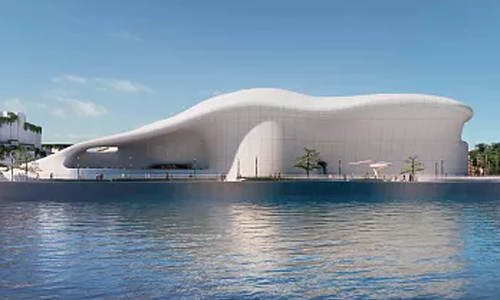
TeamLab Phenomena Abu Dhabi is a complex, purpose-built immersive art venue located in the Saadiyat Cultural District. The project comprises approximately 17,000 sqm GFA, delivered over a 24-month programme and opened to the public in 2025. Its architectural form is defined by double-curved organic façades, bespoke interior geometries, and dense integration of sensor networks and AI-driven systems.
BIM was mandated from concept through handover. Federated models were developed progressively from LOD 300 to LOD 500 to support design coordination, fabrication, construction and facilities management. A Common Data Environment enabled real-time collaboration and a single source of truth across all stakeholders.
Advanced BIM uses included 4D planning and simulation to visually link construction sequencing with the programme, improving planning accuracy and reducing programme deviations. Scan-to-BIM workflows validated complex organic surfaces and projection-critical installations, preventing rework and safeguarding the immersive experience. Parametric façade modelling using advanced computational tools enabled fabrication-grade accuracy for bespoke panels and eliminated design-to-construction translation risks.
The stated BIM aims were to enhance coordination, reduce rework, improve planning certainty, enable accurate construction of complex geometry and deliver usable asset information for operations. BIM played a fundamental role in overcoming the project’s complexity and directly enabled the successful design, delivery and handover of a world-class immersive destination.
Emaar, The Economic City (KAEC)
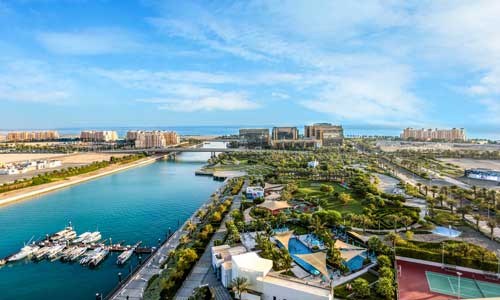
City Operations Intelligence and Asset Lifecycle Transformation is a city-scale digital initiative redefining how urban assets are governed across their full lifecycle – including operations, maintenance, optimisation, renewal and replacement.
Conceived to overcome fragmented asset data, manual maintenance practices and limited lifecycle visibility, the project established a unified enterprise ecosystem anchored by an asset lifecycle platform and an integrated PropTech stack.
Previously non-digital records and workflows were converted into structured, automated processes, enabling predictive maintenance, real-time governance, and data-driven decision-making across facilities, utilities, community services, and public realm infrastructure.
The initiative institutionalises operational systems, management frameworks, and industry standards - integrating data, platforms, and workflows into a unified operating model. International best practices, innovation, and sustainability principles are embedded into city-wide operations, supported by centralised performance management that drives continuous improvement.
A centralised Operations Nerve Centre provides live lifecycle visibility, linking asset condition, performance, compliance, and cost, while spatial intelligence and field mobility digitise execution at the point of work.
SAUDI ARAMCO
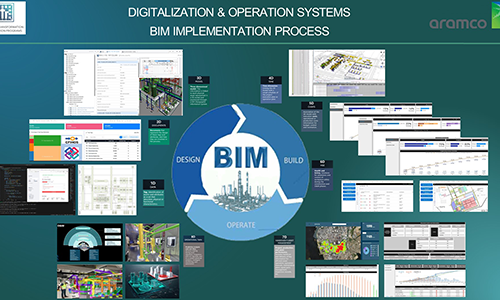
At Riyas NGL Fractionation Facilities project, BIM is implemented throughout the entire project lifecycle, from conceptual design to facility management, enabling the integration and validation of project metadata within a structured, accessible, collaborative, and multidimensional platform: the AIM Asset Information Management system.
This environment allows stakeholders to visualise, simulate, and manage all project phases efficiently, supporting an effective project management and data-driven decision-making. BIM provides significant improvements in cost and schedule performance, quality, and safety through digital safety tools during construction and operational phases.
Furthermore, BIM models captured real data to support dimensional design and monitor construction progress, focused on delivering an as-built BIM model fully aligned with site reality. Finally, BIM model became the foundation for O&M Digital Twin withing an advanced asset maintenance and management through predictive analysis and simulation of maintenance activities, leading to reduced downtime and extended operational life. BIM, fully aligned with Tecnicas Reunidas´ expertise in managing large-scale and highly complex Oil & Gas projects, contributes to achieve the objectives of high efficiency, quality, safety, project delivery excellence, and digital integration for Aramco projects.
King Salman Park Foundation

King Salman Park is one of the world’s largest urban parks, transforming a former military airfield in central Riyadh into a climate-resilient, biodiverse, and socially inclusive urban ecosystem. Spanning 17 sq km, with over 11 sq km of green space, the project integrates landscapes, culture, sports, and mixed-use districts within a unified sustainability framework.
The project supports Vision 2030, the Saudi Green Initiative, and Net Zero 2060 by regenerating degraded land, improving liveability, and reducing environmental impact in an arid climate. Sustainability is embedded through a systems-based approach covering water, energy, mobility, biodiversity, and social infrastructure.
Environmental outcomes include approximately 1 million trees, 600+ plant species, and habitat for up to 250 bird species, doubling Riyadh’s green space per capita. All landscape irrigation uses treated recycled water supported by smart irrigation and engineered soils. Buildings target reductions in potable water use, operational energy, and embodied carbon.
Social outcomes include 150 attractions, 50 venues, and a 7.2 km walking, cycling, and micromobility loop. Mixed-use districts accommodate approximately 100,000 residents and support 30,000 jobs. Governance is delivered through King Salman Park Foundation’s Sustainability Framework across planning, design, procurement, and operations, translating ESG objectives into measurable metropolitan-scale outcomes.
KENT
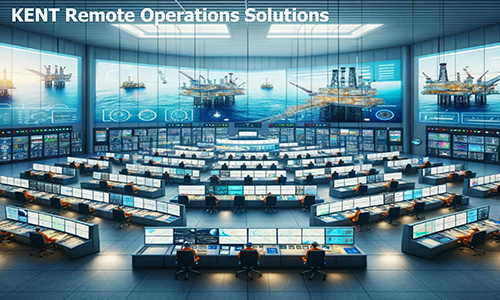
ADNOC Offshore has embarked on a strategic initiative to implement a Remote Central Control Room (CCR) and Real-Time Operations Center at its Abu Dhabi headquarters, enabling full remote operation of two of its facilities.
This project supports ADNOC’s Lean Operating Model, enhancing HSE performance, operational efficiency, and profitability by centralising monitoring, control, and shutdown functions for offshore assets. The new control room will integrate advanced digital technologies, cybersecurity, and redundancy measures to ensure 24/7, 365-day remote operations, with offshore CCRs serving as emergency backups.
This transformation positions ADNOC as a leader in digitalisation and remote operations, reducing offshore exposure, optimising resources, and aligning with global sustainability and efficiency goals.
Sobha Modular

Sobha One is a landmark high-rise residential development delivered by Sobha Realty, with Sobha Modular playing a central role through large-scale industrialised offsite construction. For the project, Sobha Modular manufactured and supplied 7,183 fully finished bathroom pods, along with high-performance façade systems and modular cladding, all produced under controlled factory conditions.
The project demonstrates how modular and offsite construction can be deployed at scale in a dense, high-rise residential environment to deliver measurable improvements in quality, productivity, sustainability, and workforce wellbeing.
Standardisation, BIM-led digital coordination, and factory-based quality assurance enabled consistent outcomes while significantly reducing onsite variability, rework, and risk.
Sobha One also highlights the power of integrated collaboration, with early engagement between the developer, designers, site teams, manufacturers, and logistics partners. Close alignment between production planning and site sequencing ensured smooth installation of modular elements within the overall construction program.
Together, these strategies position Sobha One as a benchmark project for sustainability in the region, demonstrating how modular solutions can transition from isolated pilots to a repeatable, scalable delivery model for high-rise residential developments.
SAUDI ARAMCO

The King Salman International Complex for Maritime Industries (Maritime Complex) stands as a landmark achievement in industrial construction, embodying innovation, strategic foresight, and execution excellence.
As a flagship project under Saudi Vision 2030, it aspires to become a global leader in sustainable maritime development. The high-tech yard is designed to set the standard for sustainability in the global maritime industry, with a commitment to achieving ambitious targets that reduce carbon emissions and mitigate impact on marine life.
Covering approximately 12 million square meters, the Maritime Complex is one of the largest full-service maritime yards in the Middle East & North Africa. The Complex integrates shipbuilding, repair, offshore rig fabrication, and comprehensive lifecycle services, positioning itself as the preferred MRO (maintenance, repair, and overhaul) hub for regional and global operators.
Strategically, the Maritime Complex positions Saudi Arabia as a global logistics hub connecting three continents, enhancing trade efficiency, global supply chain integration, and export capabilities, and will support 6% of global maritime traffic using Saudi Arabia’s waters. By enabling domestic production of rigs and vessels, it significantly reduces operational costs for major entities, while fostering innovation in logistics, offshore energy, and supply chain management.


The Centre for Geographic Information Systems (CGIS), under Qatar’s Ministry of Municipality, partnered with Khatib & Alami (K&A) to establish the country’s first fully in-house aerial mapping and geospatial production capability.
The project addressed Qatar’s reliance on external geospatial data providers and fragmented government datasets, modernising geospatial management to ensure timely, accurate, and secure decision-making amid rapid urban development under Qatar National Vision 2030.
The initiative digitised the entire State of Qatar using advanced airborne imaging and topographic and bathymetric LiDAR technologies, producing high-resolution orthophotos, vector maps, classified LiDAR point clouds, digital elevation models, and 3D city models from LOD0 to LOD3.
To enable an integrated digital workflow, the project implemented airborne acquisition systems, image-processing and vector-production software, conversion tools, ArcGIS Enterprise, and web-based GIS delivery platforms.
K&A led the procurement and integration of specialised equipment, including a Diamond Aircraft DA62 MPP Survey Star, the region’s first UltraCam Osprey 4.1 aerial camera, topographic and bathymetric LiDAR sensors, and Vexcel Imaging’s UltraMap processing suite.
This established a fully sovereign aerial mapping capability that delivers high-quality geospatial data to 100+ government entities and academic institutions, supporting planning, infrastructure, environmental management, and public services.

 DCTC KSA