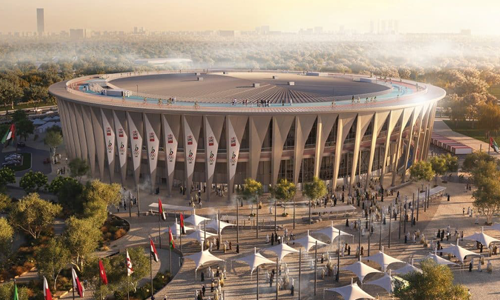
 DCTC KSA
BIM Project of the Year
This category focuses on how BIM has been planned and implemented on a particular project (or related projects). The project must have been completed within the last 24 months or be at the end of a major phase and demonstrate multiple BIM uses, not just 3D modelling. This included design processes, scheduling, cost control, sustainability, operations & maintenance or integration with industry 4.0. To be shortlisted, entrants had to provide detail on tangible outcomes, such as gains in time, safety, quality, cost, or lifecycle asset management. Contractors, consultants, developers or project owners could enter.
Aldar Athlon
Parsons
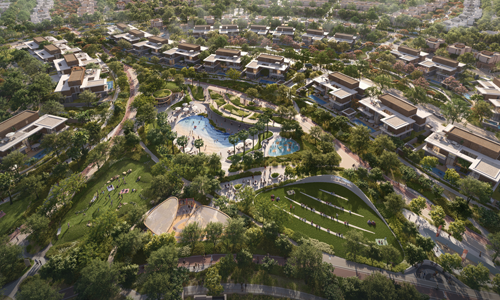
Aldar Athlon represents a visionary urban development that seamlessly integrates wellness, sustainability, and smart design. Situated in Dubailand, UAE, Athlon spans 119 hectares, offering a dynamic residential community centred on active living.
The development features residences designed to promote movement and wellbeing, complemented by an interconnected network of running tracks, bike lanes, sports courts, and green open spaces. BIM played a crucial role in managing the project’s scale and complexity, enabling real-time collaboration, optimised scheduling, and seamless design coordination among multidisciplinary teams.
By integrating BIM-driven cost control, Parsons ensured budget adherence without compromising quality. The model facilitated early clash detection, reducing rework and enhancing project efficiency. BIM also supported sustainability targets, contributing to LEED Cities & Communities ‘Platinum’ certification and a Fitwel Community ‘2 Stars’ rating by optimising resource efficiency, renewable energy integration, and water conservation strategies.
Beyond design and construction, BIM enhanced operational planning, supporting waste management, climate resilience, and lifecycle sustainability. The structured framework enabled data-driven decision-making, improving long-term efficiency. The project set clear BIM objectives - streamlining workflows, optimising resources, and achieving sustainability goals.
Through meticulous execution, Athlon exceeded these targets, showcasing BIM’s transformative impact on urban development.
Bulgari The Lighthouse
Dubai Holding Real Estate
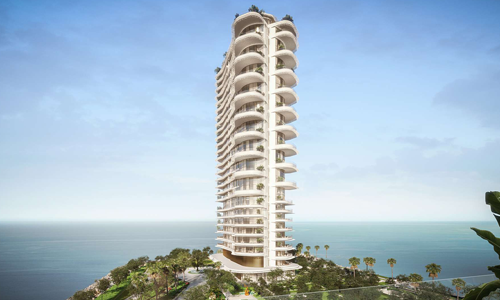
The Bulgari The Lighthouse Project is an ultra-luxury development that reflects Dubai Holding Real Estate’s (DHRE) commitment to precision, innovation, and high delivery standards through the strategic use of advanced digital technologies. As a project carrying the prestigious Bulgari brand, execution demanded uncompromising quality, bespoke detailing, and flawless coordination across stages.
The project’s complexity was intensified by reliance on specialised materials, custom fabrications, and high-end finishes sourced from international suppliers outside the UAE, each governed by distinct technical specifications, production methodologies, and extended lead times requiring exact alignment with design intent and construction progress.
To address these challenges, BIM was positioned from the outset as a core driver of delivery accuracy. A comprehensive implementation strategy ensured that multidisciplinary models supported long lead procurement, installation planning, and performance verification.
A centralised Common Data Environment, powered by Autodesk Construction Cloud, enabled seamless collaboration among global stakeholders, ensuring real time communication, design review, and transparent issue resolution. The DHRE Digital construction team strengthened the BIM governance through structured workflows, coordination cycles, and an execution plan. Collectively, these efforts positioned Bulgari The Lighthouse as a benchmark for BIM excellence.
Red Sea International Airport
Red Sea Global
Red Sea International Airport (RSI) serves as the primary gateway to Saudi Arabia’s Red Sea destination, delivering an ultra‑luxury travel experience from first arrival.
Located within the 28,000 km² destination on the Kingdom’s west coast, the airport supports one of the world’s most ambitious regenerative tourism developments while operating within strict environmental carrying‑capacity limits.
Conceived as a boutique airport at a national scale, RSI is designed to accommodate up to two million passengers annually by 2030, applying a business‑lounge concept throughout the terminal to create a seamless and comfortable passenger experience.
BIM has been integral to RSI from design through operations, structured around ISO 19650 and enabled by BIM 360 as the Common Data Environment. This digital framework supported coordinated multidisciplinary models, clash avoidance, and optimised fabrication workflows, significantly reducing rework and on‑site intervention.
The BIM‑led approach strengthened cost control, improved information accuracy, enhanced quality assurance, and supported safer construction across a remote and logistically complex site. RSI now stands as a benchmark for digital delivery, operational efficiency, and sustainable aviation infrastructure.

RIYAS NGL PROJECTS DEPARTMENT
Saudi Aramco
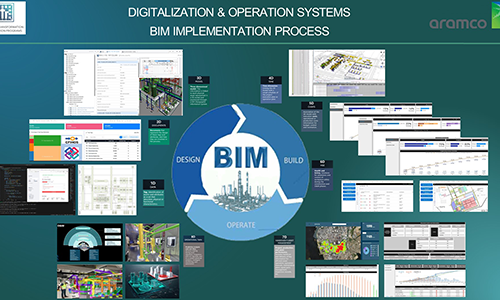
At Riyas NGL Fractionation Facilities project, BIM is implemented throughout the entire project lifecycle, from conceptual design to facility management, enabling the integration and validation of project metadata within a structured, accessible, collaborative, and multidimensional platform: the AIM Asset Information Management system.
This environment allows stakeholders to visualise, simulate, and manage all project phases efficiently, supporting an effective project management and data-driven decision-making. BIM provides significant improvements in cost and schedule performance, quality, and safety through digital safety tools during construction and operational phases.
Furthermore, BIM models captured real data to support dimensional design and monitor construction progress, focused on delivering an as-built BIM model fully aligned with site reality. Finally, BIM model became the foundation for O&M Digital Twin withing an advanced asset maintenance and management through predictive analysis and simulation of maintenance activities, leading to reduced downtime and extended operational life. BIM, fully aligned with Tecnicas Reunidas´ expertise in managing large-scale and highly complex Oil & Gas projects, contributes to achieve the objectives of high efficiency, quality, safety, project delivery excellence, and digital integration for Aramco projects.
Rua Al Madinah Project
RUA Al Madinah
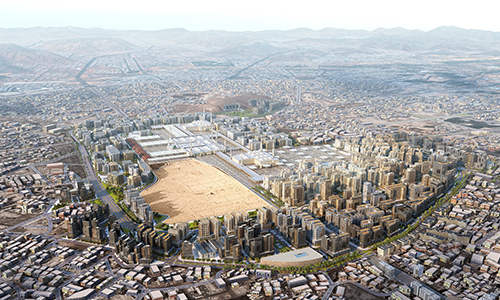
The Rua Al Madinah Project is a Giga-development in Al-Madinah Al-Munawarah, Saudi Arabia, aiming to redevelop the areas surrounding Al-Masjid Al-Nabawi to enhance the experience of pilgrims and residents while preserving the spiritual and historical identity of the Holy City.
The development covers 1.35 million square meters, including a wide range of branded hospitality assets, including two- to five-star hotels and residences, delivering around 47,000 hotel keys, which makes it one of the largest hospitality projects in the region.
As part of the digital development vision for Rua Al Madinah Holding, BIM is mandated throughout the delivery and operation of the project in accordance with ISO 19650 standards. BIM is the essential enabler for digital development on the project, covering different areas of adoption, driving design and construction coordination, enhancing the quality and accuracy of project delivery, and leveraging digital workflows and innovation.
By establishing a collaborative environment and integrating construction activities and site progress with BIM, the management of data exchange, information, and communication among all project stakeholders has been improved.
SEVEN-P3
Saudi Binladin Group
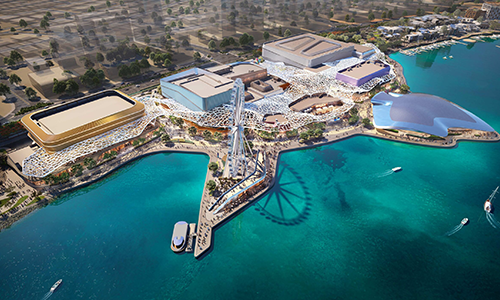
The implementation of Digital Construction, with a strong focus on BIM was meticulously planned and executed. Key areas for BIM implementation were carefully analysed, and a comprehensive strategy was developed to ensure its successful integration.
Saudi Binladin Group (SBG) has embraced BIM technologies throughout the project, adopting several advanced solutions to maintain exceptional standards of quality and performance. Central to this effort was the establishment of an Autodesk ACC Common Data Environment (CDE), which enabled seamless information exchange workflows among all stakeholders.
This platform also functioned as an accessible issue management system, allowing relevant concerns to be efficiently highlighted and monitored. The Digital Construction Team at SBG played a pivotal role in implementing, supporting, and maintaining the BIM process as well as the associated tools, ensuring alignment across the project lifecycle.
To further enhance collaboration and engagement, SBG implemented a robust BIM Execution Plan (BEP) and conducted weekly BIM coordination meetings. Cutting-edge technologies such as 360-degree cameras, Augmented Reality and Virtual Reality were also employed to foster stakeholder involvement.
These tools were continuously reviewed and refined to ensure that workflows remained dynamic and meaningful for the entire project team. The SEVEN-P3 Project exemplifies the transformative potential of BIM, showcasing how it can elevate construction practices to unprecedented levels of accuracy and efficiency.
Sobha One
PNC Architects | Sobha Realty
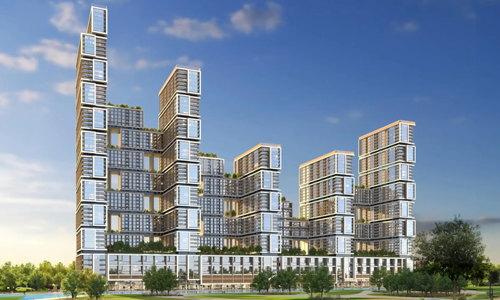
Sobha One is a high-density residential development in Dubai, UAE with a built-up area of approximately 6 million sq.ft. The project delivers over 3,000 residential apartments for almost 10,000 residents. It comprises a 350-metre-long arrangement of nine interlinked towers ranging from 30 to 66 storeys.
ESG objectives were established at project inception.
Environmental targets focused on reducing operational energy, water consumption, and whole-life carbon in response to Dubai’s climate. Social objectives addressed resident wellbeing through daylight access, natural ventilation, biophilic landscapes, and shared amenities. Governance objectives centred on BIM-enabled coordination, compliance, and lifecycle data management.
These objectives were delivered through integrated digital design and delivery processes.
Performance-based modelling informed massing, orientation, façade design, and landscape planning, achieving 60% energy savings against 2005 benchmarks and approximately 40% water reduction.
A prefabrication-led approach reduced embodied carbon and construction waste by over 30%.
Social outcomes include a 330m × 60m shared amenities deck, lagoon-side promenades, shaded public realms, and adaptable residential layouts. Governance outcomes were validated through integrated BIM workflows, automated compliance, and Green Mark Platinum Super Low Energy (SLE) and Whole Life Carbon certification.
TeamLab Phenomena Abu Dhabi
MIRAL & ALEC
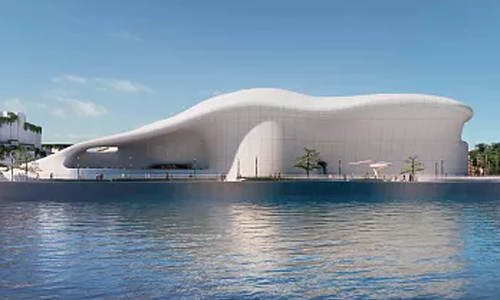
TeamLab Phenomena Abu Dhabi is a complex, purpose-built immersive art venue located in the Saadiyat Cultural District. The project comprises approximately 17,000 sqm GFA, delivered over a 24-month programme and opened to the public in 2025. Its architectural form is defined by double-curved organic façades, bespoke interior geometries, and dense integration of sensor networks and AI-driven systems.
BIM was mandated from concept through handover. Federated models were developed progressively from LOD 300 to LOD 500 to support design coordination, fabrication, construction and facilities management. A Common Data Environment enabled real-time collaboration and a single source of truth across all stakeholders.
Advanced BIM uses included 4D planning and simulation to visually link construction sequencing with the programme, improving planning accuracy and reducing programme deviations. Scan-to-BIM workflows validated complex organic surfaces and projection-critical installations, preventing rework and safeguarding the immersive experience. Parametric façade modelling using advanced computational tools enabled fabrication-grade accuracy for bespoke panels and eliminated design-to-construction translation risks.
The stated BIM aims were to enhance coordination, reduce rework, improve planning certainty, enable accurate construction of complex geometry and deliver usable asset information for operations. BIM played a fundamental role in overcoming the project’s complexity and directly enabled the successful design, delivery and handover of a world-class immersive destination.
Turtle Bay - Linear Studios & Management Residential Buildings
Group AMANA
Turtle Bay – Linear Studios & Management Residential Buildings is a fast-track, multi-building residential program delivered at Turtle Bay, part of The Red Sea destination. The project was executed using BIM as a production-grade system - not only 3D coordination - linking design, manufacturing and site assembly.
The development is delivered with a high level of offsite fabrication and modular construction, which Red Sea Global highlights as a way to reduce environmental impact while improving quality and safety. On the AMANA side, modular production was executed through DuBox’s factory-controlled concrete modular process, enabling parallel progress: manufacturing activities started before full site readiness, creating measurable schedule advantage on Red Sea residential delivery.
BIM was deployed across:
(1) multi-discipline coordination and issue management in a cloud CDE;
(2) Design for Manufacturing & Assembly-driven modelling for modular interfaces, tolerances and fit-out;
(3) 4D planning for sequencing and logistics;
(4) 5D/QTO alignment to control procurement and cost variance; and
(5) digital QA/QC traceability from factory inspections to site installation sign-off. The stated aims were speed-to-market, safer execution, reduced waste/rework, and predictable handover readiness supported by project KPI evidence (issue logs, model QA gates, production/installation dashboards, waste registers and HSE reporting) and aligned with DuBox’s published performance indicators for waste, safety, time and offsite completion.

Velodrome Abu Dhabi
Trojan General Contracting
Velodrome Abu Dhabi is a highly specialised, international-standard cycling venue delivered under a design and build model with strict geometric tolerances, complex steel structures, and specialist façade systems.
Due to the project’s complexity and high interface risk, Trojan General Contracting implemented BIM as the primary delivery platform to control coordination, quality, programme certainty, and cost.
BIM was applied across design coordination, construction readiness, procurement validation, quality control, and digital handover. Fully federated models covered architecture, structure, MEP, specialist systems, and infrastructure, enabling early identification and resolution of critical interfaces, particularly between the steel structure and façade packages. Information maturity was managed through controlled LOD progression - from LOD 300 and 350 to LOD 400 and 450 for fabrication readiness, and LOD 500 to support operations and maintenance.
The stated aims of BIM were to reduce rework, improve constructability, accelerate decision-making, strengthen cost control, and deliver reliable asset data. These aims were achieved through model-based coordination, structured issue management, model-based quantities, and BIM-enabled QA/QC workflows.
Measurable outcomes included faster interface resolution, reduced material waste, improved procurement accuracy, enhanced inspection efficiency, and a structured digital handover, demonstrating BIM’s tangible impact on project delivery and lifecycle readiness.