 DCTC KSA
Digital Project of the Year
This category highlights the effective application of digital tools on specific AEC projects or within organisations to optimise business-related processes or tasks in the AEC industry. Submissions were required to illustrate the transformation of non-digital information into digital data, culminating in full-scale automation that eliminated all manual input in the process. Eligible participants included project owners, developers, contractors, and consultants within the built environment sector.
AICC ERP Implementation
Al Ayuni Investment & Contracting Co.
In just 12 months, we replaced a fragmented, on-premise operating landscape - Legacy ERP Solutions and multiple in-house systems - with a single, governed cloud enterprise backbone on Oracle Fusion Cloud.
The platform now supports over 9,000 employees and more than 65 active projects across Saudi Arabia, establishing a single source of truth across procurement, projects, assets, finance, logistics, and workforce operations.
Key capabilities include enterprise Project Portfolio Management; BOQ and subcontract management for end-to-end commercial control; and Asset Deployment to manage the full equipment lifecycle from mobilisation and maintenance to billing. Time & Attendance was redesigned as an operational capability rather than a standalone HR process. Face ID–enabled time capture feeds directly into subcontract valuations, BOQ consumption, project costing, and payroll, ensuring accurate, auditable labour cost allocation aligned with site progress.
Oracle Transportation Management (OTM) introduced end-to-end logistics visibility, optimising material movement and enabling project-linked cost-to-serve analysis. Oracle EPM supports enterprise budgeting, forecasting, and scenario modelling, while digital approvals and role-based controls strengthened governance.
Despite complex integrations, data migration, and enterprise-wide change, we delivered a big-bang go-live with all critical modules operational from day one - setting a new benchmark for cloud-enabled digital transformation in construction.
City Operations Intelligence & Asset Lifecycle Transformation
Emaar, The Economic City (KAEC)
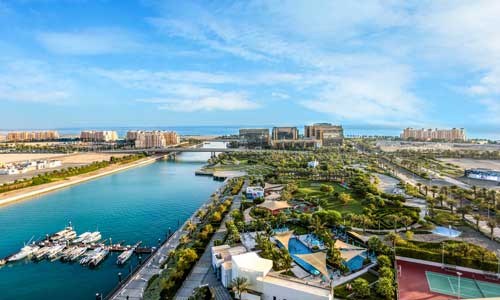
City Operations Intelligence and Asset Lifecycle Transformation is a city-scale digital initiative redefining how urban assets are governed across their full lifecycle – including operations, maintenance, optimisation, renewal and replacement.
Conceived to overcome fragmented asset data, manual maintenance practices and limited lifecycle visibility, the project established a unified enterprise ecosystem anchored by an asset lifecycle platform and an integrated PropTech stack.
Previously non-digital records and workflows were converted into structured, automated processes, enabling predictive maintenance, real-time governance, and data-driven decision-making across facilities, utilities, community services, and public realm infrastructure.
The initiative institutionalises operational systems, management frameworks, and industry standards - integrating data, platforms, and workflows into a unified operating model. International best practices, innovation, and sustainability principles are embedded into city-wide operations, supported by centralised performance management that drives continuous improvement.
A centralised Operations Nerve Centre provides live lifecycle visibility, linking asset condition, performance, compliance, and cost, while spatial intelligence and field mobility digitise execution at the point of work.
ETSD PMIS Integrated Digital Platform
NEOM
NEOM’s Engineering & Technical Services Department (ETSD) delivered a flagship digital project to revolutionise engineering operations and collaboration. The initiative focused on building an integrated Project Management Information System (PMIS) that connects planning, design, quality, and cost management into one seamless platform.
This project enhanced design review and team collaboration through innovative tools, including BIM-based review capabilities, workflow distribution templates, and a RACI matrix for clear accountability. By digitising these processes, ETSD streamlined communication, reduced manual effort, and improved decision-making across multidisciplinary teams.
Today, advanced applications are live across many functional domains, with additional rollouts in progress. NEOM PMIS integrates multiple tools into a unified solution, delivering transparency, efficiency, and real-time insights for thousands of stakeholders.

Jeddah Tower
Saudi Binladin Group
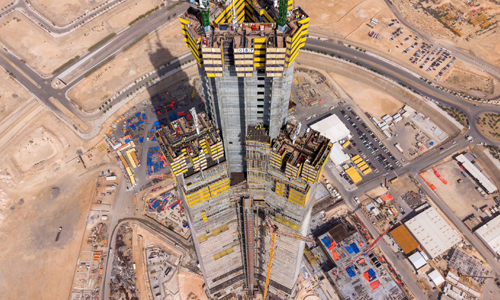
The Jeddah Tower digital project was initiated to enable the safe, predictable delivery of a 1,007‑meter‑plus mega‑tall structure, where conventional construction management approaches were insufficient due to extreme height, complex logistics, and accelerated vertical sequencing.
Following the project’s restart in early 2025, Saudi Binladin Group (SBG) faced the challenge of controlling quality, safety, and schedule risk across a rapidly scaling site workforce that reached nearly 5,000 personnel.
By December 2025, the project achieved 27.9% overall progress, reached 50% of total concrete volume, recorded 6.7 million safe manhours without Lost Time Injury, and advanced the leading edge to Level 87, maintaining a five‑day construction cycle. The tower is forecast to reach Level 100 by mid‑April 2026, requiring high confidence in execution and coordination.
SBG implemented an integrated digital delivery strategy aligned with ISO 19650, combining BIM and 4D scheduling, 3D laser scanning, Cupix 360° field capture, real‑time concrete maturity monitoring, and IoT‑enabled crane control systems. The stated aims were to ensure accurate verification of as‑built conditions, improve progress transparency, enhance concrete quality assurance, optimise lifting operations, and reduce reliance on manual inspections.
These aims were met through data‑driven sequencing, faster issue resolution, improved tolerance control, safer lifting operations, and real‑time performance visibility.
Osool Assets Digitisation - Riyadh Diplomatic Quarter
Osool Integrated Real Estate
The Diplomatic Quarter digitisation is Osool’s flagship project, demonstrating governance-grade digitisation of legacy buildings at their most challenging. The Al Kindi & Al Fazari buildings, which are 40+ years old, have been continuously occupied and are culturally significant diplomatic facilities.
They were handed over long before digital documentation standards existed. Original records are incomplete or absent. Yet these assets require the same data quality for investment governance, maintenance planning, and regulatory compliance as any modern building.
This project addresses a gap that industry standards have not yet resolved. ISO 19650 covers the entire lifecycle, including refurbishment and repair, but academic literature confirms that BIM implementation in existing buildings remains limited. The National Institute of Standards and Technology quantified the cost of poor interoperability at $15.8bn annually across US facilities, with $9bn attributable to operations.
Osool deployed multi-source reality capture (laser scanning at ±2–4mm accuracy, 360-degree photography, targeted surveying), progressive BIM reconstruction aligned to ISO 19650, IPMS measurement integration, and AI-enabled quality validation. Delivery was led by local Saudi companies, with no disruption to occupied diplomatic facilities. The methodology is now being scaled across Osool’s entire portfolio.

Productivity Management Application
Saudi Binladin Group - Contracting
The Manpower Tracking Application is a multi‑phase digital transformation initiative that replaces fragmented, manual manpower processes with a unified, real‑time system. It was launched to address delays, inefficiencies, poor visibility, the absence of standardised allocation methods, and non‑transparent Selling, General and Administrative (SG&A) reporting.
The solution introduces automated daily attendance, direct and indirect manpower allocation, AI‑driven reallocation across projects, productivity benchmarking, dynamic workforce distribution, and a centralised professions database.
These capabilities enable accurate progress measurement, optimised resource utilisation, and fully automated labour‑cost modelling.
The initiative achieved its objectives by delivering real‑time reporting, stronger controls, automated cost distribution, transparent SG&A tracking, and data‑driven workforce planning - transforming manpower management into an integrated and efficient organisational process.

Qatar National 3D Mapping Program
Khatib & Alami
The Centre for Geographic Information Systems (CGIS), under Qatar’s Ministry of Municipality, partnered with Khatib & Alami (K&A) to establish the country’s first fully in-house aerial mapping and geospatial production capability.
The project addressed Qatar’s reliance on external geospatial data providers and fragmented government datasets, modernising geospatial management to ensure timely, accurate, and secure decision-making amid rapid urban development under Qatar National Vision 2030.
The initiative digitised the entire State of Qatar using advanced airborne imaging and topographic and bathymetric LiDAR technologies, producing high-resolution orthophotos, vector maps, classified LiDAR point clouds, digital elevation models, and 3D city models from LOD0 to LOD3.
To enable an integrated digital workflow, the project implemented airborne acquisition systems, image-processing and vector-production software, conversion tools, ArcGIS Enterprise, and web-based GIS delivery platforms.
K&A led the procurement and integration of specialised equipment, including a Diamond Aircraft DA62 MPP Survey Star, the region’s first UltraCam Osprey 4.1 aerial camera, topographic and bathymetric LiDAR sensors, and Vexcel Imaging’s UltraMap processing suite.
This established a fully sovereign aerial mapping capability that delivers high-quality geospatial data to 100+ government entities and academic institutions, supporting planning, infrastructure, environmental management, and public services.

Riyas NGL Fractionation Facilities
Saudi Aramco
The Riyas NGL Fractionation Facilities project is setting a benchmark for large-scale digitalisation in industrial construction in Saudi Arabia. Built around a fully integrated Digital Twin, the initiative brings together an ecosystem of advanced digital tools defined by Aramco and implemented in close collaboration with Técnicas Reunidas.
The result is a unified environment that enhances visibility, coordination and operational performance across engineering, construction and site activities. The business challenge was clear: managing a highly complex megaproject with multiple disciplines, contractors and concurrent activities while maintaining safety, quality and schedule control.
Aramco aimed to accelerate digital transformation, increase efficiency and position the project at the forefront of industrial innovation. The Digital Twin was designed as a single source of truth, integrating heterogeneous data and enabling data-driven decision-making.
By the 50% project milestone, the programme had deployed and integrated personnel and resource management platforms, drone-based inspections, time-lapse camera networks, laser scanning, AR/VR solutions and robotic quadrupeds for safety monitoring.
All technologies are connected to the Digital Twin, providing asset-level context and a real-time view of project status. These capabilities have enabled faster responses, improved coordination and more informed decision-making in one of Aramco’s most demanding industrial developments.
The S Tower
Heyazah Real Estate Development
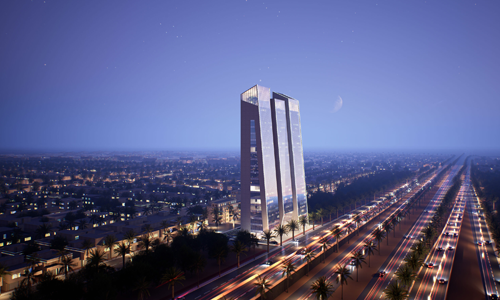
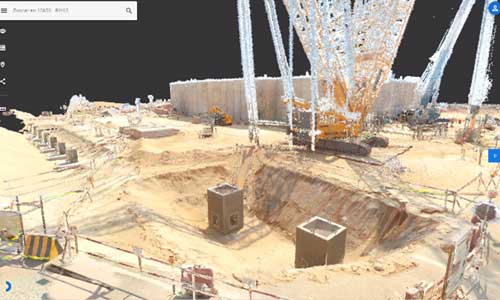
The S Tower is a next-generation premium commercial high-rise developed by Heyazah in Riyadh, Saudi Arabia. It has been designed as a digitally enabled business environment that integrates smart infrastructure, sustainability, and advanced project delivery methodologies.
The business trigger behind the digital initiative was the increasing demand for intelligent, efficient, and future-ready commercial workspaces capable of supporting high-performance organisations and institutional tenants. Traditional development and operational models were no longer sufficient to meet evolving market expectations for efficiency, sustainability, and data-driven asset management.
Heyazah implemented a fully integrated digital delivery and smart-readiness strategy across the project lifecycle, from design coordination and construction management to operational infrastructure planning. Advanced modelling, centralised digital project platforms, and smart building provisions were deployed to enhance efficiency, transparency, and long-term asset performance.
The objective was to create a high-value commercial asset that optimises construction efficiency, enhances tenant experience, and ensures operational excellence through digital enablement. These objectives were successfully achieved through coordinated digital execution, reduced design conflicts, improved delivery timelines, and the integration of smart-ready infrastructure.
The S Tower now stands as a benchmark for digitally enabled commercial developments in Saudi Arabia, delivering measurable value in efficiency, sustainability, and long-term investment performance.