 DCTC KSA
Tech for Safety & Wellbeing Award
To be shortlisted, entries had to show how digital tools improved safety, well-being, or quality of life on AEC projects or within an organisation. The technology needed to play a vital role using AI, IoT, wearables, connected cameras, virtual reality, etc., to monitor people and assets, alert to dangers, provide virtual rehearsals, or gather data for ongoing improvements. Project owners, developers, contractors, or consultants from the built environment could enter, but not technology providers.
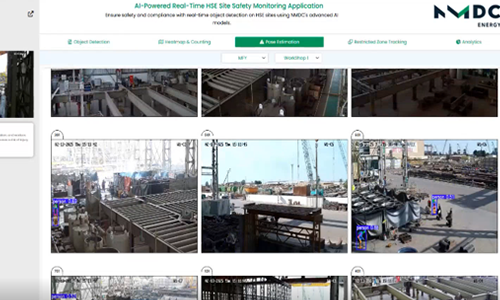
AMAN – AI-Powered Site Safety Monitoring System
NMDC Group
AMAN – HSE AI Camera System is NMDC Energy’s in-house, always-on safety platform that uses computer vision and AI to detect unsafe conditions and unsafe actions (including behavioral safety, not just Personal Protective Equipment). Running 24/7 on-prem in NMDC’s data center, AMAN analyzes live camera feeds from yards, sites and offshore logistics to trigger real-time alerts and generate evidence-based analytics for proactive risk prevention.
Unlike manual spot checks, AMAN provides continuous, uniform monitoring across multiple zones, flags hazards (eg, working at height, line-of-fire, suspended loads, restricted-zone breaches, vehicle–pedestrian proximity), and recognises positive observations (safe acts and environmental compliance), reinforcing a strong safety culture.
The business trigger was clear: reduce incident risk and intervention time while standardising HSE enforcement across diverse sites and contractors. Stated aims were to shorten detection-to-response time, reduce recordable incidents, and improve safety compliance and learning.
These aims have been met through live alerts, trend dashboards, and structured follow-ups integrated with HSE workflows, with measurable reductions in high-risk observations and faster closure of corrective actions (−34% high-severity observations; corrective-action on-time rate up from 62% to 90% within six months).
Aramco Stadium
Saudi Aramco
The Aramco Stadium project, a 47,000-seat world-class venue in Saudi Arabia’s Eastern Province, is a fast-tracked mega-infrastructure initiative designed to host the 2027 AFC Asian Cup and the 2034 FIFA World Cup.
With an accelerated 34-month construction timeline and a workforce exceeding 12,000 people, the project posed significant safety and wellbeing challenges. The business trigger for implementing a robust safety and wellbeing initiative was the need to ensure zero serious incidents while maintaining productivity and schedule adherence.
To address these challenges, the project team implemented a technology-led safety strategy, anchored by a centralised Safety Command Centre (SCC). This digital hub integrated real-time data from AI-powered surveillance systems, crane anti-collision systems, fall-prevention sensors, and wearable health-monitoring technologies.
Four key construction technologies - straddle carriers, strand jacks, tilting tables, and the hydraulic synchronous unloading system - were also deployed to enhance safety during complex lifting, transportation, and structural de-propping operations. These tools minimised manual handling, reduced exposure to high-risk zones, and ensured precise, controlled execution of critical tasks.
The initiative aimed to eliminate serious incidents, enhance workforce wellbeing, and maintain productivity under extreme conditions. These objectives were successfully met, evidenced by a significant reduction in near-misses, lifting-related incidents, and heat-stress cases, while maintaining schedule integrity.
DB 58, Living Legends
Delta Al Emarate Building Contracting
Delta Al Emarate Building Contracting has implemented a QR code-based safety initiative on our projects. This initiative involves embedding QR codes into Material Safety Data Sheets (MSDS), emergency contact directories, project safety guidelines and company safety resources, which are also incorporated into email signatures for easy, widespread access.
The business trigger behind this project was the need to improve accessibility to safety information across our work sites for workers and project managers, particularly in a large-scale construction environment. By offering quick, direct access to critical safety details, workers are empowered to act quickly and accurately in the event of emergencies, thus improving overall safety response times.
The main aim of the initiative was to streamline access to vital safety data, making it faster and more efficient for all personnel on-site.
This goal has been successfully met-delivering real-time, on-demand safety resources and ensuring that critical safety information is never more than a scan away. The outcome has been significant with a marked reduction in safety-related delays and a faster emergency response, leading to a safer and more informed workforce on this project.

Navatech AI - Rixos Entertainment Hub
Colain
The Rixos Entertainment Hub project at Jumeirah Beach Residence in Dubai adopted Navatech AI as a core component of its health and safety management approach, moving beyond traditional inspection-based systems to a proactive, workforce‑engagement driven model. The business trigger for implementation was the need to strengthen frontline engagement, improve real-time visibility of safety risks, and intervene early on emerging trends before incidents or injuries occurred within a dynamic construction environment.
Navatech was deployed not merely as an observation reporting platform, but as a digital enabler for proactive conversations between the PMC (Colain), contractors, and the workforce. The system allowed safety observations, site events, training records, and incidents to be captured in real time, analysed for trends, and acted upon collaboratively. This approach empowered supervisors and workers to actively participate and have shared accountability for health and safety.
The aims were to enhance workforce engagement, identify systemic risks early, improve training participation, and prevent injuries through timely intervention. These objectives were successfully met, most notably through the early identification and control of unsafe work-at-height practices, which were addressed before escalation into serious incidents.
Navatech became a central tool in embedding a proactive safety culture aligned with the project’s operational and governance objectives.
Real Time Operations Center and Remote CCR
Kent
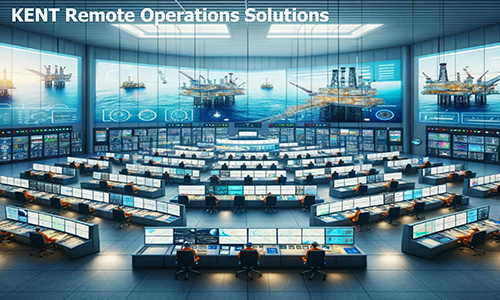
ADNOC Offshore has embarked on a strategic initiative to implement a Remote Central Control Room (CCR) and Real-Time Operations Center at its Abu Dhabi headquarters, enabling full remote operation of two of its facilities.
This project supports ADNOC’s Lean Operating Model, enhancing HSE performance, operational efficiency, and profitability by centralising monitoring, control, and shutdown functions for offshore assets. The new control room will integrate advanced digital technologies, cybersecurity, and redundancy measures to ensure 24/7, 365-day remote operations, with offshore CCRs serving as emergency backups.
This transformation positions ADNOC as a leader in digitalisation and remote operations, reducing offshore exposure, optimising resources, and aligning with global sustainability and efficiency goals.
RIYAS NGL PROJECTS DEPARTMENT
Saudi Aramco
The Riyas NGL Fractionation Facilities project represents a step change in safety management on large-scale industrial construction sites in Saudi Arabia. Driven by Aramco’s people-centric safety vision and supported by Técnicas Reunidas as EPC contractor, the initiative delivers an integrated digital safety ecosystem focused on reducing risk exposure and improving workforce well-being.
The challenge was clear: managing safety across a vast, high-risk construction site with thousands of workers and multiple contractors required more than traditional HSE controls. The project therefore shifted from reactive safety management to a proactive, data-driven approach, embedding digital tools directly into daily site operations.
At the core of the initiative is a Digital Twin acting as a central safety control layer. It integrates real-time data from connected wearables, site camera networks, drones, robotic inspection units and virtual reality platforms. This unified environment provides live visibility of personnel and assets, enables immediate alerts for unsafe situations, and supports both on-site and remote safety supervision.

